Blog · November 5, 2026 · 6 min read
How Often Should You Groom Your Dog? A Coat-by-Coat Guide
How often your dog needs grooming depends on coat type, haircut length, and home brushing. A coat-by-coat chart from a Kansas City groomer, plus how to set a recurring schedule.
If you've ever searched "how often should you groom your dog," you've probably found a dozen different answers. That's because there isn't one. A Boxer and a Goldendoodle living in the same Kansas City house have completely different grooming needs, and even two Goldendoodles can land on different schedules depending on how long their owners like the coat and how much brushing happens at home.
This guide walks through grooming frequency by coat type, explains what pushes a dog toward more or fewer visits, and shows how to set up a recurring schedule that actually sticks. The intervals below are typical ranges many groomers suggest, not rules. Your groomer will tune them to your dog.
Why there's no single answer
A grooming schedule is really the answer to four questions:
- What kind of coat does your dog have? Hair that keeps growing (poodles, doodles, Shih Tzus) needs haircuts. Fur that sheds (Labs, Huskies, Goldens) needs brushing and deshedding, not trimming.
- How long do you keep the coat? A short summer cut can go longer between appointments than a fluffy teddy-bear style, because there's less hair to tangle.
- How much brushing happens at home? Regular brushing stretches the time between professional visits. No brushing shortens it.
- What does this particular dog need? Skin, activity level, swimming habits, age, and how well the dog tolerates grooming all matter.
Once you know those four answers, the right interval usually becomes obvious. Until then, the chart below is a reasonable starting point.
Grooming frequency by coat type
These are typical ranges many groomers suggest. Treat them as a starting conversation with your groomer, not a schedule carved in stone.
| Coat type | Examples | Professional visit | At-home brushing |
|---|---|---|---|
| Smooth / short single coat | Boxer, Boston Terrier, Pit-type dogs, Dachshund (smooth) | Bath & brush every 6–12 weeks | Weekly rubber-curry or soft brush |
| Short double coat | Labrador, Beagle, Pug, Rottweiler | Bath or deshed every 6–8 weeks; more during spring and fall shedding | 1–2 times per week |
| Long or thick double coat | Golden Retriever, Husky, German Shepherd, Australian Shepherd, Pomeranian | Deshed every 6–8 weeks | 2–3 times per week, daily during heavy sheds |
| Curly or wool coat | Poodle, Goldendoodle, Labradoodle, Bichon Frise | Haircut every 4–6 weeks | Several times a week; daily if kept long |
| Wire coat | Schnauzer, Scottish Terrier, Wire Fox Terrier | Haircut every 6–8 weeks | Weekly |
| Long drop or silky coat | Shih Tzu, Maltese, Yorkshire Terrier, Lhasa Apso | Haircut every 4–6 weeks | Daily if kept long; a few times a week in a short cut |
Nail trims are their own schedule. Many dogs need nails done every 3–4 weeks regardless of coat type, and a lot of owners fold them into a standing grooming appointment or book a quick nail-only visit in between.
How haircut length changes the math
For dogs that get haircuts, length is the biggest lever you control.
A short cut (often called a summer cut or kennel cut) leaves little hair to tangle. Many dogs in a short style can comfortably go 6–8 weeks between appointments with light brushing at home.
A medium "teddy bear" length looks softer and fuller but tangles faster, especially behind the ears, under the collar, in the armpits, and on the legs. Most dogs kept at this length do best on a 4–6 week schedule with brushing several times a week.
A long or fluffy style is the most work. It typically means a 4-week schedule and near-daily brushing all the way to the skin. If that's more than your household can keep up with, there's no shame in going shorter. A well-maintained short coat is healthier and more comfortable than a long coat that mats between visits.
If you're not sure where your routine lands, tell your groomer honestly how often you'll brush. A good groomer would rather pick a length that matches your real life than one that looks great for a week and then becomes a problem.
Home care that stretches the time between visits
You don't need a full home grooming kit. A few habits do most of the work:
- Brush to the skin, not just the surface. For curly and long coats, a slicker brush followed by a metal comb is the standard combination. If the comb snags, there's a tangle forming underneath.
- Hit the trouble spots. Behind the ears, under the collar, armpits, belly, and the backs of the legs tangle first.
- Brush before baths, not after. Water tightens tangles into mats. Bathing a tangled dog at home usually makes things worse.
- For shedding breeds, brush outdoors when you can. An undercoat rake or deshedding tool once or twice a week during seasonal sheds keeps a surprising amount of hair off your floors.
- Check nails and ears while you're at it. Brushing time is a natural moment to notice anything that looks or smells different, which you can mention to your groomer or vet.
None of this replaces a professional groom. It just means your groomer spends the appointment on the haircut instead of working through tangles, which is better for your dog and for your bill, since PRR's haircuts and desheds are priced on hands-on grooming time.
When to ask your groomer to adjust the schedule
Schedules aren't permanent. Ask about moving your interval if:
- Your dog is arriving with mats or tangles, even though you're brushing. That usually means the interval is too long for the current length.
- The seasons change. Many double-coated dogs benefit from closer deshed appointments in spring and fall.
- Your dog's routine changes. More swimming, a new daycare, or a move to a more active lifestyle all affect the coat.
- You're changing the haircut. Going shorter may let you stretch the schedule; going longer usually means tightening it.
- Your dog is a puppy or a senior. Young dogs often do better with shorter, more frequent visits to build comfort; older dogs sometimes need gentler, shorter sessions too.
Your groomer sees your dog's coat up close every visit and is the best person to tell you whether the current plan is working.
Setting up a recurring plan that sticks
The dogs that stay in the best shape are almost always the ones on a standing schedule. Not because owners love calendars, but because waiting until the coat "looks like it needs it" usually means waiting too long.
Here's a practical way to set one up:
- Book the first appointment and let the groomer assess the coat.
- Talk honestly about length and home brushing so the groomer can recommend a realistic interval.
- Put the next appointment on the calendar before you leave. PRR's mobile clients keep a recurring 4-, 6-, or 8-week schedule, and mobile appointments typically book 1–3 weeks out depending on your area, so recurring slots are the easiest way to keep your spot.
- Reassess after two or three visits. If the coat is arriving in good shape, you've found your interval. If not, tighten it or shorten the cut.
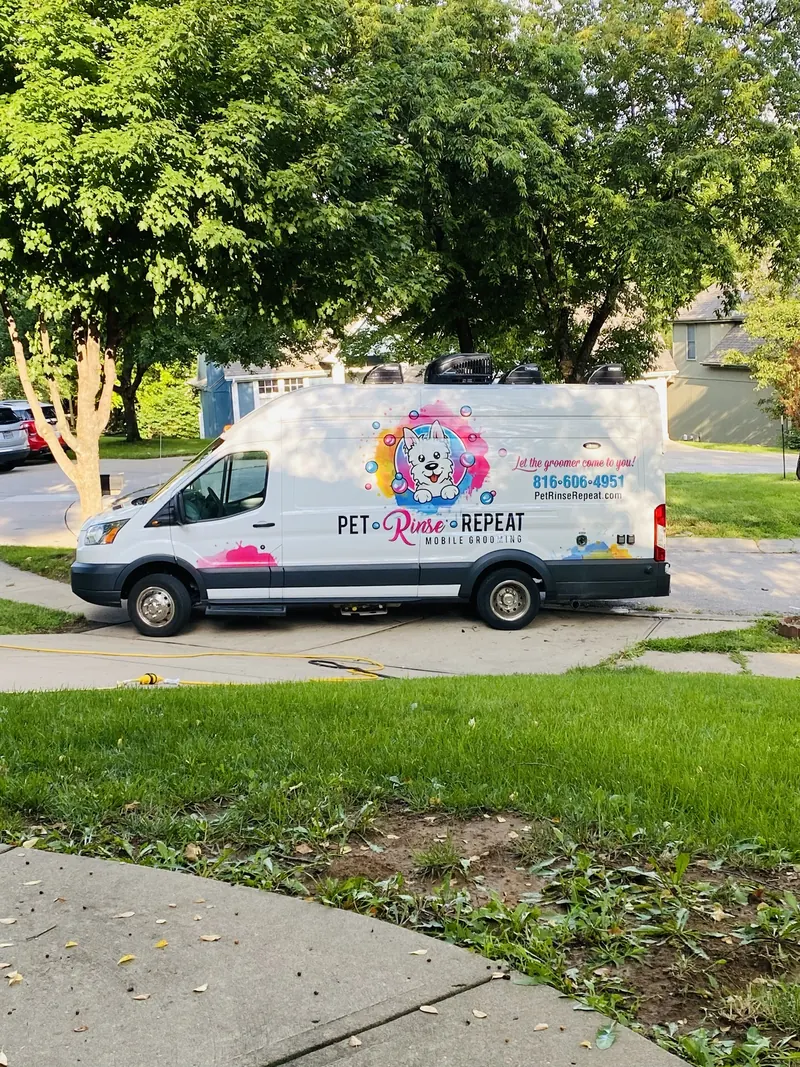
If you're in the Kansas City metro and would rather have the groomer come to you, mobile grooming on a recurring schedule removes most of the friction. If you prefer a shop setting, the salon in North Kansas City works well for dogs of any size and coat, and it's open seven days a week. You can compare both options on the mobile grooming and salon grooming pages.
Ready to book?
Pick the setting that fits your dog and your routine, then let the groomer recommend an interval at the end of the first visit. Rates for haircuts, desheds, and bath & brush services are on the pricing page, and mobile appointments for the KC metro can be scheduled directly on the mobile grooming page. If you'd like to see the salon's hours or location first, visit salon grooming.
Next step
Pick a time online — it takes about two minutes.
Or call (816) 606-4951. See pricing or the service page.