Blog · November 5, 2026 · 10 min read
Why Does My Dog Get Matted Even Though I Brush Him?
You brush your dog and he still mats. Here's why it happens (surface brushing, friction spots, water, coat change), how to check with a comb, and what to do about it.
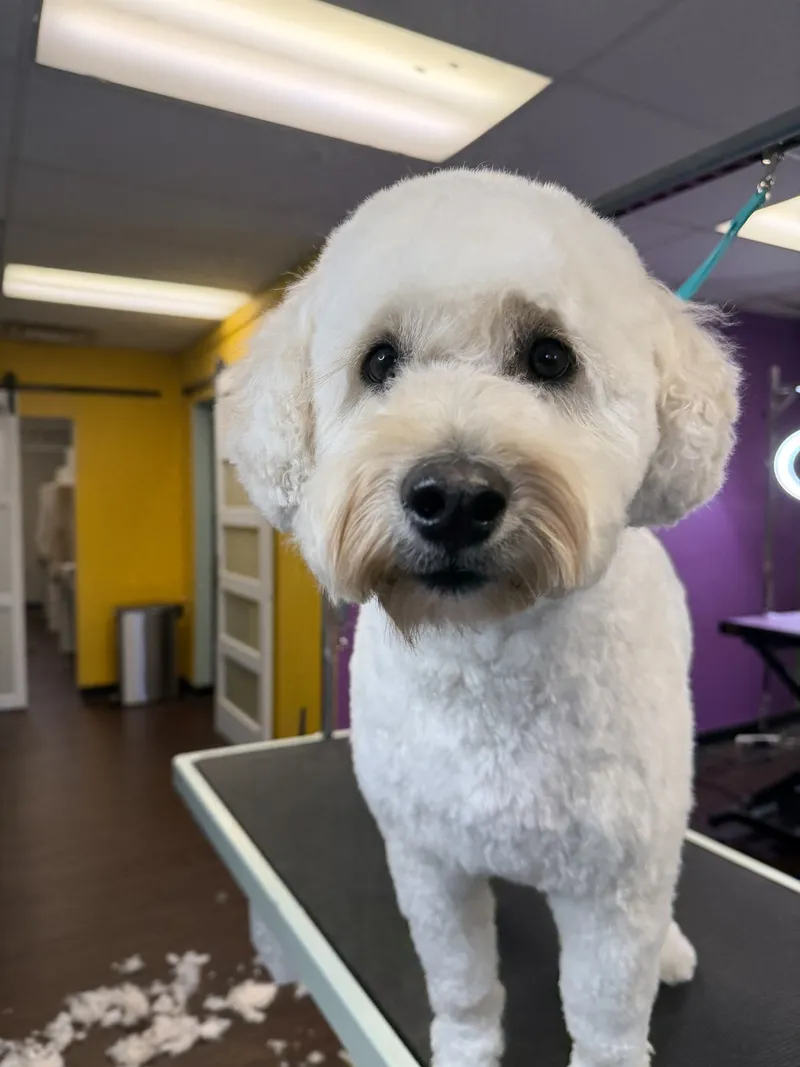
You brush your dog. Regularly, even. And the groomer still finds mats, or you reach down to pet him and feel a felted lump under the fluff. This is one of the most common frustrations with doodles, poodle mixes, Shih Tzus, Maltese and other coats that grow continuously, and in almost every case the answer is the same: the brushing is happening, but it isn't reaching the skin, it's missing the places where mats actually start, or something else (water, friction, a coat change) is undoing the work between sessions.
None of that is a character flaw. The surface of a coat can look perfect while the layer against the skin is tangling. This article explains why a brushed dog still gets matted, how to check for yourself with a comb, what you can safely fix at home, and when it's time to hand it to a groomer.
What a mat actually is
A tangle is a few hairs twisted around each other. A mat is what a tangle becomes when it's left alone: live hair, shed hair, dander and sometimes debris knotted together and then tightened by moisture and movement. Mats form at the skin and build outward, which is why a dog can be soft and fluffy on top and tight underneath.
They matter for more than looks. A mat pulls on the skin every time the dog moves, holds moisture and dirt against the skin, and hides what's going on underneath. Veterinary sources note that hot spots and skin irritation often sit under a clump of matted fur where the owner can't see them.
Why a brushed dog still gets matted
You're brushing the top, not the skin
This is the big one. A brush drawn over the coat smooths the outer inch of hair and leaves the base untouched. Worse, with some coats it can push loose hair down toward the skin where it packs in. Groomers call the fix brushing to the skin or line brushing: you part the hair, brush the layer underneath the part down to the skin, move the part up a little, and repeat. It's slower, but it's the only brushing that prevents mats.
Wrong tool for the coat
A pin brush or a soft bristle brush feels nice and does very little on a curly or long coat. For doodles, poodles, and long single coats, the standard pair is a slicker brush (fine bent wire pins that reach through the coat) followed by a metal greyhound comb to check the work. For double-coated dogs like Golden Retrievers or Aussies, an undercoat rake pulls out the shed undercoat that a slicker glides over. If the tool is wrong, more brushing doesn't help.
Friction zones
Mats don't form evenly. They start where hair rubs: behind and under the ears, in the armpits, along the collar or harness line, between the back legs, under the tail, and around the ankles and feet. These spots get rubbed with every step, scratch and head shake, and they are also the spots most of us brush least because they're awkward to reach or the dog squirms. If your dog only mats in two or three places, this is almost always why.
Water on an unbrushed coat
Bathing, swimming, rain and snow all tighten existing tangles. Wet hair clumps, and as it dries the clump sets. A dog who swims regularly, or who gets a bath before being brushed out, will mat faster than a dog who stays dry. The rule groomers follow: brush and comb before the bath, dry thoroughly after it, and brush again once dry.
Humidity
Kansas City summers are humid, and humidity does to a curly dog coat what it does to curly human hair: the hair swells, frizzes and grabs its neighbors. Damp-air months, plus more swimming and more time in wet grass, make summer and early fall the peak season for matting in curly coats.
The coat change in doodles and poodle mixes
Doodle puppies have a soft, forgiving coat that barely tangles. Somewhere around six to twelve months (sources on Goldendoodles put the shed at roughly six and a half to ten months, with the adult coat maturing over up to two years), that puppy coat is replaced by a denser adult coat, and the shed puppy hair gets trapped in the new growth. Owners who never saw a mat for the first eight months suddenly find the dog matted everywhere. It isn't that you stopped brushing; it's that the coat changed under you. During this window, most doodles need brushing to the skin daily, or a shorter clip until the change finishes. Doodle owners can find a coat-by-coat plan in our Goldendoodle grooming schedule.
Shed undercoat trapped in a curly coat
Doodles, Bichons, Portuguese Water Dogs, Cocker Spaniels, Shih Tzus, Maltese and Havanese are called "non-shedding," but what's really happening is that the hair they drop doesn't fall to the floor. It stays caught in the surrounding coat. Left in place, that dead hair is the glue that turns a tangle into a mat. It has to be combed out, and a surface brush won't do it.
Long coats kept too long between grooms
A long coat is a daily job. Even perfect brushing has a limit, and when the coat gets past three or four inches, keeping the base clear takes more time than most households have. Many groomers suggest a professional groom every four to eight weeks for curly and long coats, with the shorter end of that range for longer styles. Stretching the interval is where a lot of well-brushed dogs quietly fall behind.
How to check with a comb (the "comb test")
This is what a groomer does in the first minute of an appointment, and you can do it at home.
- Take a metal comb with medium-to-fine teeth (a greyhound comb).
- Put the teeth all the way down to the skin and draw the comb out through the hair.
- Work the whole dog, paying special attention to behind the ears, armpits, collar line, inner thighs and tail.
If the comb slides through to the skin everywhere, the coat is in good shape. If it catches, stops, or can't get down to the skin at all, there's a tangle or mat under the fluff. A second check: part the hair with your fingers. If you can't see skin at the bottom of the part, the base of the coat is matted even if the surface looks fine.
Do the comb test after every brushing session, not instead of it. Brushing without combing afterward is how owners end up surprised at the groomer.
How to safely work a small, early tangle
A small tangle that you caught early, in a dry coat, is a reasonable home job. Here's the method groomers teach:
- Work dry. Never wet a tangle to loosen it. A light mist of detangling or conditioning spray on the knot itself is fine.
- Hold the hair at the base. Pinch the hair between the tangle and the skin so your pulling doesn't tug on the dog.
- Start at the outer edge, not the skin. Pick the knot apart with your fingers from the outside in, then use the tips of the comb or the corner of the slicker to work loose hair out a little at a time.
- Keep it short. A few minutes, then stop. If the dog is pulling away or you're getting nowhere, stop sooner.
- Comb through to confirm. The tangle is gone when the comb passes through to the skin.
When a mat is past home care
Some mats aren't a home project, and recognizing them is what keeps your dog comfortable. Hand it to a groomer if:
- The mat is tight to the skin and you can't get a finger between the mat and the body.
- The matting is widespread, or you find a sheet of felt rather than individual knots.
- The skin under or around the mat is red, damp, smelly or sore.
- Your dog flinches or snaps when you touch the area.
- You've been working on it for more than a few minutes with little progress.
Please don't cut mats out with scissors
This is the one rule every groomer and vet agrees on. Mats sit against the skin and pull it up into the knot, so what looks like solid hair often has a fold of skin inside it. Dog skin is thin and loose, and it's very hard to tell where hair ends and skin begins. Scissor cuts to the skin from home dematting are one of the most common grooming injuries vets see, and they often need stitches. If you can't comb it out, the right tool is a clipper in trained hands, not scissors.
What a groomer does instead
A groomer has two options, and which one they choose comes down to the dog's comfort.
Dematting means working the mats out by hand, with conditioning product, a slicker, a comb and sometimes a dematting tool. It works for a few isolated mats that aren't yet felted tight, on a dog who tolerates it. It pulls. Even done well, it's uncomfortable, and most groomers set a limit on how long they'll do it before switching approaches.
A shorter clip means running a clipper blade under the matting so the mat lifts off in a sheet and the coat is reset to a short, even length. When mats are tight to the skin or spread over the body, this is the kind choice. The alternative, an hour or more of pulling on a dog who can't understand why, isn't something a caring groomer does to save a hairstyle. Groomers sum it up as "humanity over vanity."
Here's what that looks like in practice:
| What the groomer finds | Likely plan |
|---|---|
| Comb passes to the skin everywhere | Groom to the style you asked for |
| A few loose tangles behind ears or in armpits | Brush out, then the style you asked for |
| A few tight, isolated mats | Clip those spots short and blend, keep the rest at length |
| Tight mats across legs, chest or body | Shorter clip all over, grow back out over the next grooms |
| Felted "pelt," or sore skin underneath | Short clip for comfort; the skin may need a vet's eye |
A good groomer talks you through this before changing the plan, and a shorter cut this time doesn't mean the long look is gone. It means the coat gets a clean start. If your dog comes home shorter than you expected, that's the groomer choosing the dog over the photo. If you're in the area and want a professional assessment, the team at the Pet Rinse Repeat salon starts every appointment with a comb through the coat and will tell you plainly what's realistic.
Common mistakes that keep well-brushed dogs matting
- Brushing only what you can see. The back and the top of the head rarely mat. The armpits, ears and collar line do.
- Skipping the comb. The brush makes it look done; the comb tells you if it is.
- Bathing a tangled dog. Water sets tangles. Always brush and comb first.
- Leaving the collar or harness on all day. Constant rubbing in one spot builds a mat line. Take gear off at home when it's safe to.
- Letting the dog air-dry after swimming. Towel, dry, then brush once the coat is fully dry.
- Choosing a length you can't maintain. A long coat that gets brushed twice a week is a matted coat waiting to happen. A shorter cut with the same brushing is a comfortable dog.
- Pressing hard with a slicker. It doesn't reach deeper, it just scratches the skin and teaches the dog to hate brushing. Light pressure, more strokes.
How to prevent it next time
If you want the full technique, see how to brush your dog at home. The short version:
Once the coat is reset, keeping it mat-free is far less work than fixing it. A routine that holds up:
| Task | How often | Notes |
|---|---|---|
| Line brush to the skin with a slicker | Daily for long curly coats; 2–3x/week for shorter cuts | Part the hair, brush the layer under the part, move up |
| Comb test with a greyhound comb | After every brushing | Especially ears, armpits, collar line, tail, legs |
| Check and brush friction zones | Daily, even on off days | Takes two minutes |
| Brush and comb before any bath or swim | Every time | Then dry fully and brush again |
| Remove collar/harness at home | Daily | When safe to do so |
| Professional groom | Every 4–8 weeks depending on length | Shorter interval for longer styles and during coat change |
For most owners, the honest fix is one of two things: brush to the skin every day, or keep the coat at a length where every-other-day brushing is enough. Either choice is fine. The combination that fails is a long coat with surface brushing.
A note from Kansas City
If your dog keeps coming up matted no matter how much you brush, bring him to the Pet Rinse Repeat salon and we'll comb through the coat, show you where it's catching and what's realistic for the length you want. Book salon grooming online and we'll take it from there.
Frequently asked
- How often should I brush my dog to prevent mats?
- It depends on the coat. Curly, wavy and long single coats (doodles, poodles, Shih Tzus, Maltese, Bichons) usually need brushing to the skin every day or two if kept long, and two or three times a week if kept short. The friction spots need attention more often than the body.
- Can I bathe my dog if he has mats?
- Brush and comb first, then bathe. Water tightens tangles into mats, and a mat that gets wet and air-dries becomes much harder to remove. If you cannot get a comb through the coat, skip the bath and let a groomer deal with the coat first.
- Why does my dog mat behind the ears and under the collar?
- Friction. Ears flap, collars and harnesses slide, and legs rub against the body with every step. Movement twists hair around itself, and in long or curly coats that twist turns into a knot. These are also the spots a brush tends to skip.
- Will my dog's coat grow back after being shaved for mats?
- Yes. A shave for matting is a reset, not a permanent change. Most coats grow back to a workable length within a couple of months, and you can grow the longer look back over the next few grooms once a brushing routine is in place.
- Is a matted coat actually bad for my dog or just ugly?
- It is uncomfortable and can become a health problem. Mats pull on the skin with every movement and trap moisture and debris against it, which can lead to irritation, sores and hidden hot spots. The tighter and older the mat, the worse it is for the skin underneath.
Sources
- Preventive Vet — Why Your Dog's Coat Gets Matted and What to Do About Mats
- PetMD — How To Handle Matting in Dogs and Cats
- American Kennel Club — Types of Dog Brushes
- VCA Animal Hospitals — Hot Spots: What Are They and How to Treat Them
- Doodle Doods — Line Brushing a Doodle
- Doodle Doods — Why Your Doodle Keeps Getting Shaved: The Owner-Groomer Disconnect
- Groomer's Choice — How Does a Dog Get Matted?
- We Love Doodles — Goldendoodle Coat Changes
Next step
Pick a time online — it takes about two minutes.
Or call (816) 606-4951. See pricing or the service page.